"The Voice of God"
25 Feb 2026
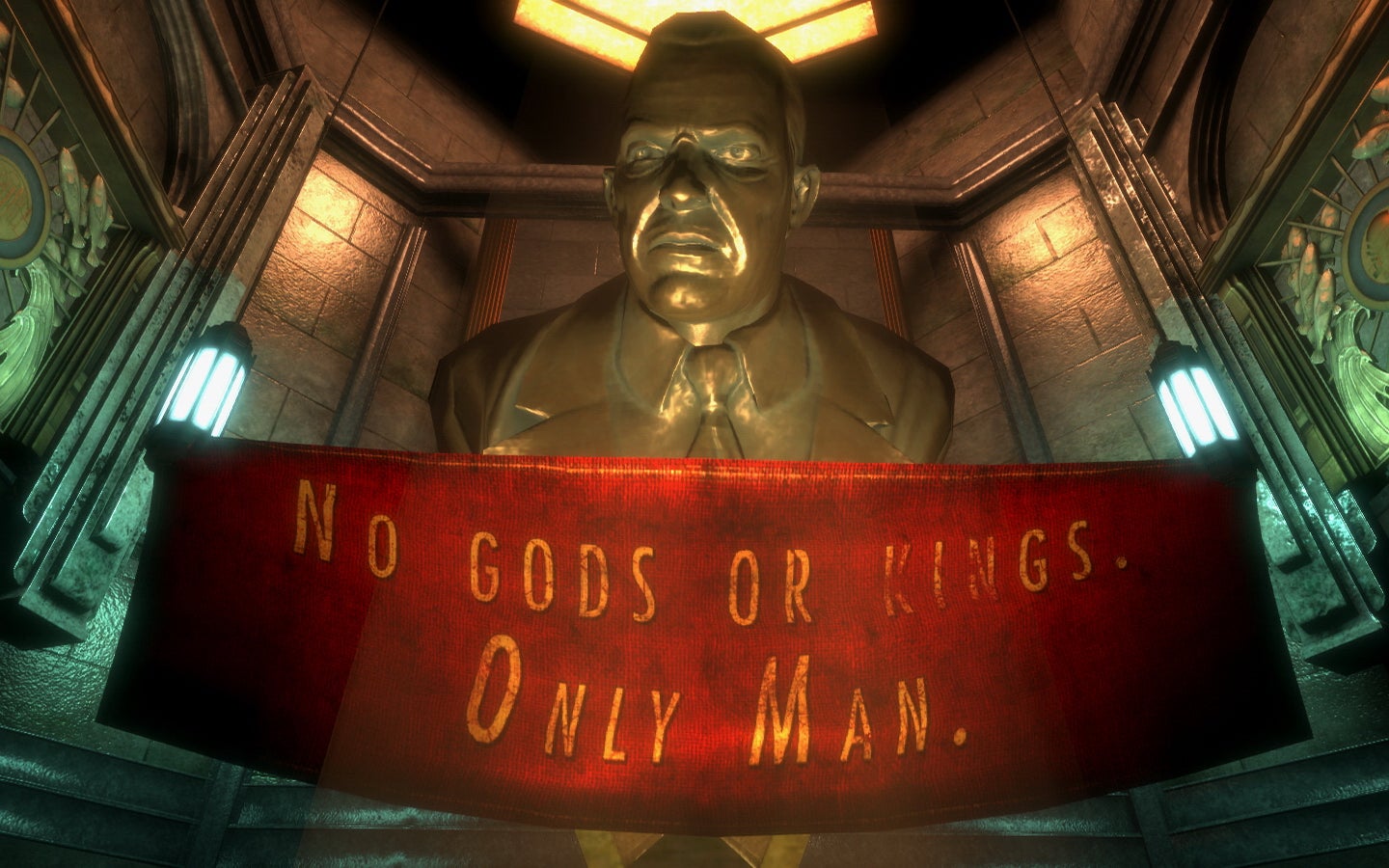
When you finally "take the third hit" and breakthrough into the land of machine elves eager to tell you that you, yes, really, You, are The Chosen One™, what is actually happening here: a genuine encounter with gods, angels, spirits, and all manner of metaphysical entities, or merely the deterministic outcome of chemical, physical, and neurophysiological processes emergently presenting to the conscious faculties as the six āyatana (sense doors; the five classical western senses + thought)? The answer, of course, is "yes."
"Metaphysics" is a misleading term. Seemingly non-physical phenomena such as imagination, dreaming, or theorem-proving can emerge from well-understood, objective, quantifiable, physical, & materialistic phenomena; yet their complexity can easily escape the reductionist regimes meant to treat of two-body systems, or spherical cows in a vacuum. One prefers Haskell to C++ to assembly language - or perhaps these days, English over all - so it is unsurprising that the Jungian analyst reaches for the same language as the inner alchemists and the shamans when discussing matters of mind, despite having plenty of clinical & scientific language to bear down on the same problem domain. One does not write WordPress in assembly (even if we may have been better off, were that the case); nor would it do for your psychologist - or in fact, your priest - to start talking about Maxwell's equations or action potentials in the clinic - or behind the pulpit.
Thus I will enter into the main idea, that much disagreement regarding God, qeustions of existence, nonexistence, its properties, etc. is mostly definitional, and may be ersolved with the following proviso: the gods are in your head, and your head is the firmament above, the "astral plane" inhabited by "metaphysical" beings like the assertion that 2+2 is 4, Platonic solids, and hallucinated mandalas.
You will note that in this realm of daydream and fantasy, literally anything the mind can conjure up is possible, and it was this mental creative faculty immediately apprehensible to you - the individual, right now - that was generalized and assumed to be present in (hopefully) every sapient being; and discussed not with the metaphors of normal distributions and EEGs, but the language of "gods" and "angels" and "demons," which is the best we could do for that time. However, while the language may differ, the subject matter undwer discussion is still very much the same: what remains of your conscious experience when you disregard touch, taste, sight, sound, and smell; the realm of thought.
The private inner realm in which you introspect and dialogue with yourself, reflect on who you were, are, and will become, is the Holy of Holies, the Sanctum Sanctorum; that with whom you dialogue, is God. This was Jaynes' ultimate heresy in his theory of the bicameral mind, which literally defines gods as auditory hallucinations originating in the right hemispheres of the brain, communicating with the left hemisphere over the anterior commissures which parsed and interpreted these signals as disembodied speech with no (obvious) physical origin: "the voice of gods."
The gods were in no sense "figments of the imagination" of anyone. They were man's volition. They occupied his nervous system, probably his right hemisphere, and from stores of admonitory and preceptive experience, transmuted this experience into articulated speech which then "told" the man what to do.
- Julian Jaynes, "The Origin of Consciousness in the Breakdown of the Bicameral Mind," 1976.
Flowery language befitting of an Edwardian poet or a Victorian essayist, to be sure - but just because we find such terms as "god" or even "spirits" quaint, if not hopelessly regressive and simple-minded, does not mean that the phenomena they refer to no longer exist; this would seem to be a case of putting the cart before the horse, and insisting that language actuates reality (and perhaps it does - but let us presume not, for now at least). No; simply spend this next instant of your life thinking to yourself. Whose voice did you hear? Yours, or god's? The answer, of course, is "yes."